Anchor Text Best Practices for SEO: Examples & Tips
 (39).png)
Anchor Text Best Practices for SEO: Exact Match, Branded, Generic & Partial Match Examples
Anchor text is one of those small SEO details that can have a big impact on how users and search engines understand a page. While backlinks help build authority, the words used inside those links give context about the destination page. Done well, anchor text improves relevance, supports internal linking, helps users know what they are clicking, and strengthens a natural backlink profile. Done poorly, it can look forced, manipulative, or misleading.
This guide explains what anchor text is, why it matters for SEO, the main types of anchor text, common mistakes, real-world examples, and practical “anchor text best practices” for internal links, backlinks, and guest posts.
What Is Anchor Text?
Anchor text is the clickable text in a hyperlink. It tells users and search engines what the linked page is about.
For example:
- Good anchor text: best SEO tools → takes users to a page reviewing SEO tools.
- Bad anchor text: click here → gives no clear context about the destination page.
The link itself connects one page to another, but the anchor text explains the relationship between those pages. This is why descriptive anchor text is useful for both SEO and user experience.
What Is Anchor Text in SEO?
In SEO, anchor text helps search engines understand the topic, relevance, and context of the linked page.
For example, if several relevant pages link to a guide using anchors like email marketing software, email automation tools, and email campaign platforms, those anchors give search engines more context about what the destination page covers.
This does not mean every link should use an exact keyword. A natural anchor text profile usually includes a mix of branded, partial match, generic, naked URL, and descriptive anchors.
Why Anchor Text Matters for SEO
Google uses links to discover pages and understand relationships between pages. Anchor text adds context to those links.
Anchor text helps:
- Clarify relevance: A link with the anchor email marketing software tells users and search engines that the destination page is likely about that topic.
- Improve internal linking: Clear internal anchor text helps users move through related content and helps search engines understand your site structure.
- Support backlink context: When other websites link to your page with relevant anchor text, it can strengthen topical signals.
- Improve user experience: Readers know what to expect before they click.
However, anchor text also creates risk when it’s over-optimized. Repeating the same exact-match keyword across many links can look unnatural, especially in guest posts, paid placements, or low-quality backlink campaigns.
Text Types of Anchor You Should Know
Different types of anchor text serve different purposes. A natural link profile usually contains a mix of these.
Exact Match Anchor Text: Example: Linking with an SEO agency to a page targeting that exact keyword.
- ✅ Effective when used carefully and sparingly.
- ❌ Risky when repeated too often across many backlinks.
Partial Match Anchor Text: Example: Linking with affordable SEO services instead of just SEO services.
- ✅ Adds keyword relevance while keeping the anchor more natural.
Branded Anchor text Example: HubSpot, Ahrefs, or Adxom.
- ✅ Builds trust and looks natural, especially for homepage and brand mentions.
Naked URLs Example: www.example.com.
- ✅ Common in citations, references, and natural mentions.
Generic Anchor text: Example: read more, learn here, visit this page.
- ✅ Fine in moderation.
- ❌ Weak when overused because they do not describe the destination page.
Image Anchor text: When an image is linked, its alt text serves as the anchor text.
- ✅ Useful for accessibility and context when the alt text is descriptive.
A balanced anchor text profile typically combines branded anchors, partial match anchors, natural descriptive anchors, and some generic or naked URL anchors.
What Google Loves about Anchor Text
Relevance and Context
Google prefers links that make sense in the surrounding content. The anchor should match the topic of the sentence, the source page, and the destination page.
For example, if you are writing about content marketing strategies, linking the anchor content calendar tools to a software review or planning guide gives clear context.
- ✅ Good anchor text should tell readers what they will find after clicking.
Example: In their blog “How to Develop a Content Strategy in 7 Steps,” HubSpot links to related resources and product pages in context. The link makes sense because the surrounding content supports the destination page.
.png)
Natural Variation
Repeating the same exact-match anchor again and again can look unnatural. A safer approach is to vary anchor text while keeping it relevant.
Example: A site targeting the keyword Professional Groundworking could earn links with:
- Professional Groundworking in Bath
- Top-rated Groundworking Services
- Groundworking contractors
- The Wonder Agency
This variety looks more natural than using the same keyword every time.
 (1).png)
Branded Anchors Text
Branded anchors are often safer and more natural than keyword-heavy anchors. They use a company, website, product, or author name as the clickable text.
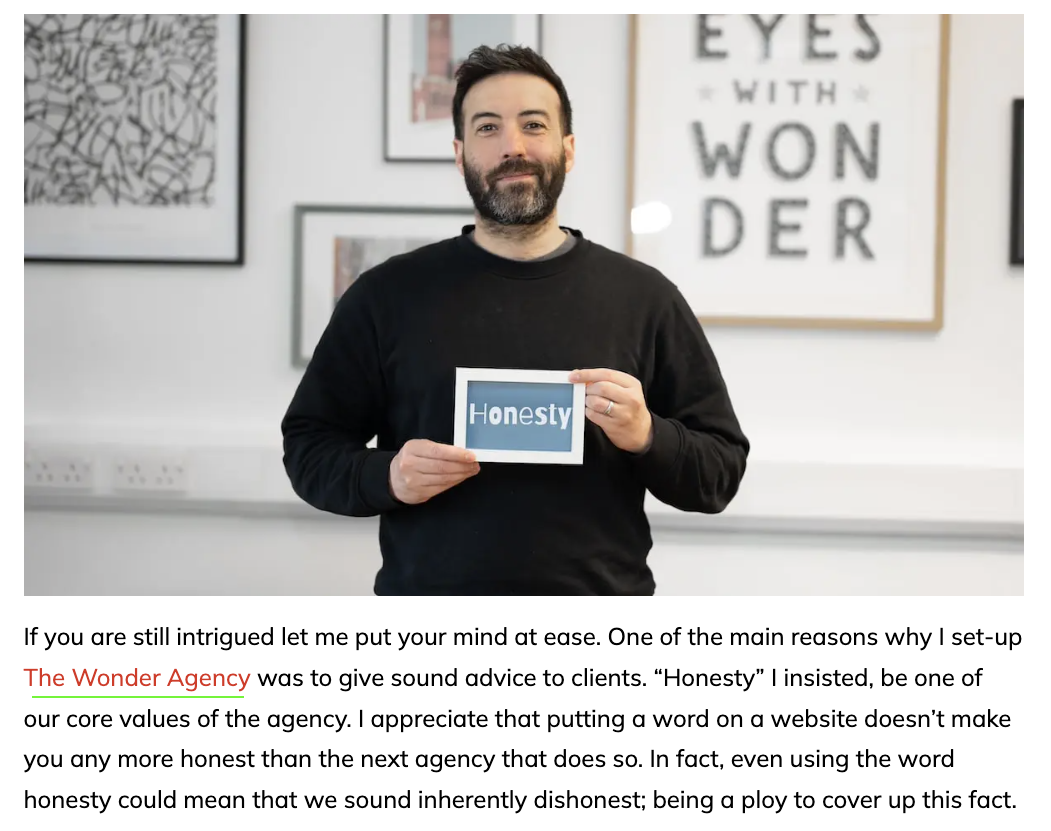
Example: For more insights, visit the Moz blog. One of the main reasons why I set up The Wonder Agency was to…
- ✅ Branded anchors support trust, recognition, and natural linking.
User-Centric Linking
Anchor text should help the reader. If someone clicks a guide to email automation, they should land on a useful guide about that topic, not an unrelated sales page.
✅ Good anchor text sets the right expectation before the click.
Internal Link Anchor Text
Internal links help users and search engines move between related pages on your website. The anchor text should describe the page being linked to.
Good internal anchor examples:
- technical SEO checklist
- guest posting strategy
- link building guide
- SEO pricing guide
Weak internal anchor examples:
- click here
- this page
- read more
- learn more
Generic anchors are not always wrong, but descriptive anchors are usually better when the link points to an important page.
For example: If you are linking to an about page link building, an anchor such as “link building strategies” gives more context than learn more.
If you are linking to a guest posting page, an anchor like “guest posting sites or guest posting services " provides users a clearer reason to click.
Anchor Text for Backlinks and Guest Posts
Backlink anchor text needs more care than internal anchor text because repeated keyword-heavy backlinks can look manipulative. For guest posts and external placements, use anchors that fit naturally into the sentence. Branded, partial match, and descriptive anchors are usually safer than forcing the same exact keyword into every article.
- ✅ Better example: A helpful guide on anchor text best practices explains how to keep links natural.
- ❌ Risky example: The best cheap SEO agency in London can help you rank fast.
The second example feels forced and promotional. It may also look unnatural if repeated across many guest posts. When building links through guest posts, focus on relevance first. The anchor text should fit the sentence, the article topic, and the linked page. If the anchor feels awkward, it’s typically a sign that the link is being forced.
What Google Hates About Anchor tText
Keyword Stuffing: Using the same keyword repeatedly as anchor text can make links look artificial.
- Bad Example: ❌ “Our SEO company is the best SEO company if you need an SEO company.” This looks forced, repetitive, and manipulative.
Irrelevant Anchors: Anchor text should match the linked page. If the anchor and destination do not match, users lose trust and search engines get mixed signals.
- Bad Example: ❌ Linking the anchor to the best sports shoes to a financial services website. This confuses users and weakens relevance.
Over-Optimization in Guest Posts: Guest posting supports link building, but exact-match anchors should not be forced into every article, author bio, or paragraph.
- Bad Example: ❌ “John runs the best cheap SEO company in New York.” This sounds unnatural and overly promotional.
Generic Overload: Generic anchors, such as “click here, and read more,” are good in small amounts, but relying on them too much weakens context.
- ❌ If most internal links use generic anchors, search engines and users get less information about where each link leads.
Real-World Examples of Anchor Text in Action
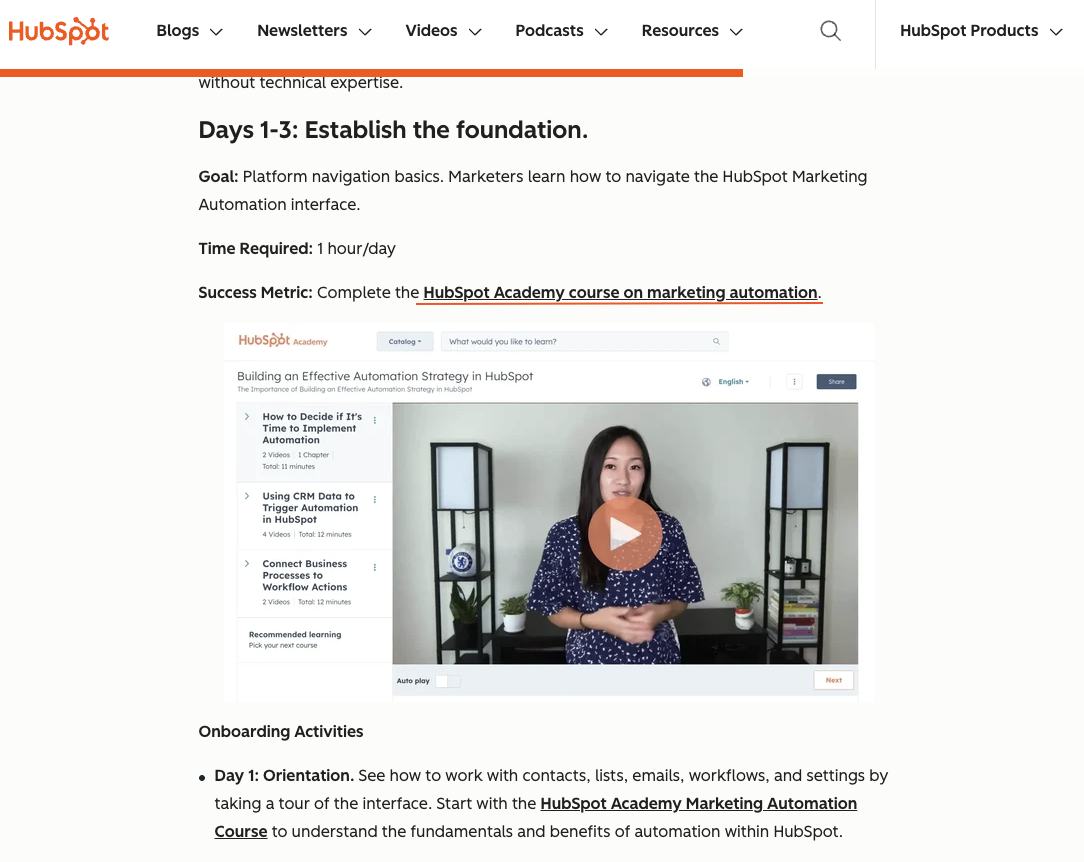
Example 1: HubSpot: HubSpot often uses branded and contextual anchors. In an article about marketing automation, they may link to a related course or product page using descriptive anchor text such as HubSpot Academy Marketing Automation Course.
Example 2: Wikipedia
Wikipedia uses many internal links with partial matches and descriptive anchors. An article about digital marketing may link naturally to related pages such as brand awareness, search engine optimization, and content marketing.
This creates a strong internal link structure and helps users explore related topics.
 (2).png)
Example 3: Ahrefs
Ahrefs often uses descriptive anchors in blog content. Instead of only using click here, they use anchors that describe the linked page, such as Keyword Planner or backlink checker.
This helps readers understand the destination before clicking.
 (3).png)
How to Optimize Anchor Text Naturally
Anchor text optimization is not about forcing keywords into every link. It is about making each link clear, useful, and relevant. Use descriptive anchors when the linked page is important. Use branded anchors when mentioning a company, tool, platform, or source. Use partial match anchors when a keyword fits naturally into the sentence. Use generic anchors only when the surrounding sentence already gives enough context. A natural anchor text strategy usually includes:
✅ Branded anchors
✅ Partial match anchors
✅ Descriptive anchors
✅ Naked URLs
✅ Some generic anchors
✅ Internal links that match the destination page
✅ Backlinks that fit naturally into the article
Avoid trying to make every backlink use your main keyword. A backlink profile with too many exact-match anchors can look unnatural, especially if those links come from guest posts, sponsored content, or unrelated websites.
Best Practices Checklist
✅ Keep anchor text relevant and descriptive
✅ Use a natural mix of anchor types
✅ Prioritise branded anchors for trust
✅ Use exact-match anchors carefully
✅ Avoid keyword stuffing and forced repetition
✅ Make internal link anchors clear and useful
✅ Match anchor text to the destination page
✅ Keep guest post anchors natural
✅ Avoid misleading anchors
✅ Audit your backlink profile regularly
FAQ
What is anchor text in SEO?
Anchor text is the clickable text in a link. In SEO, it helps users and search engines understand what the linked page is about.
What is an example of anchor text?
If a sentence links the words best SEO tools to a page about SEO tools, best SEO tools is the anchor text.
What is exact match anchor text?
Exact match anchor text uses the exact target keyword of the linked page, such as linking with an SEO agency to a page targeting that phrase.
What is branded anchor text?
Branded anchor text uses a brand name as the clickable text, such as Osdire, Adxom, Ahrefs, or Moz.
How long should anchor text be?
Anchor text should be long enough to describe the linked page clearly, but short enough to feel natural in the sentence.
Conclusion
Anchor text is both an SEO signal and a user experience detail. The best anchor text is clear, relevant, natural, and helpful. Google does not need every link to use an exact keyword. In fact, a healthy anchor text profile typically includes branded anchors, partial match anchors, descriptive anchors, generic anchors, and naked URLs.
The safest approach is simple: write anchor text for users first, keep it relevant to the destination page, avoid forced keyword repetition, and make every important link easy to understand.


Adxom is a global SEO and link-building platform
trusted by startups, agencies, and brands to grow
rankings with fast, reliable, hassle-free results.
