Backlinks in 2026: What Still Works and What’s Dead
 (72).png)
Backlinks are not “dead” in 2026. What is dead is the lazy version of link building: buying placement, spraying guest posts, and chasing vanity metrics with no regard for relevance, credibility, or user value.
Search has shifted. Google is more aggressive about spam and manipulation, and AI-driven discovery is changing what “authority” looks like. The winners are the brands earning links as a byproduct of real usefulness: original data, tools, genuinely editorial coverage, and clear topical expertise. The losers are the sites treating links like a commodity.
This pillar guide explains what still works, what’s dead, and how to build backlinks that hold up in a world where quality systems, spam policies, and AI recommendations are tightening the standards.
Why backlinks still matter in 2026
Google has never stopped using links as a discovery and ranking signal. Google’s own documentation continues to describe links as a way it finds new pages and as a signal for relevance.
What has changed is the tolerance for manipulation. Google’s spam policies explicitly target tactics designed to manipulate rankings. That includes link schemes and other deceptive practices.
On top of that, “authority” is now evaluated across more surfaces than classic blue links. You can earn a link and still lose visibility if the content is thin, unoriginal, or exists purely to rank. Conversely, brands that earn editorial mentions and citations in credible contexts often get stronger compounding returns: referral traffic, brand searches, co-citations, and a more resilient reputation footprint.
In other words, backlinks still matter. But only the right kind.
What still works in 2026
1. Editorial links earned through genuine value
The safest, strongest links in 2026 are still editorial. A journalist, editor, researcher, or specialist publisher chooses to reference your content because it improves their piece. No transactional footprint. No awkward anchor text. No forced placement.
This is why digital PR has become the modern backbone of link earning: it creates link-worthy assets that the media actually wants to cite.
A practical brand pattern here is the “content engine plus outreach engine.” Canva is a frequently cited example of scaling content that naturally attracts links because it matches user intent at huge volume, then amplifies it with outreach and distribution. On the left, we have a page for people who want to design a certificate, and on the right we have a landing page for people looking for certificate templates.

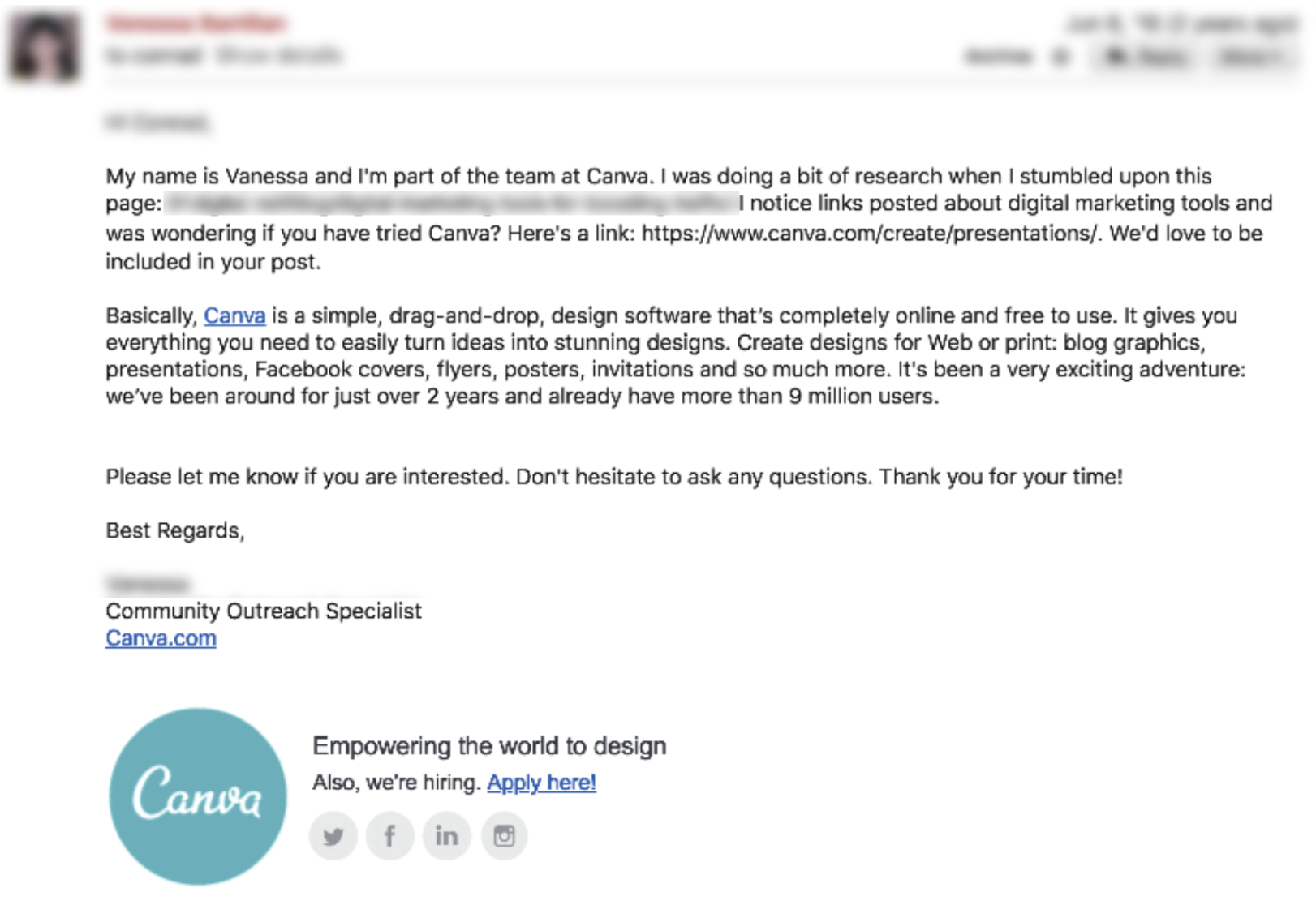
In addition, Canva has developed a team of outreach specialists who identify content that mentions things like “invitations,” “posters” or “digital marketing tools.” Then they reach out to the creators. Here’s an email that Canva sent to a blog owner back in 2016:
What to do:
- Publish content that is genuinely the best answer, not just another rewrite
- Add unique assets: original visuals, templates, calculators, datasets, benchmarks
- Promote it to people who already write about that topic
2. Data-led campaigns and research assets
If you want links that survive every update, build assets that other pages need: statistics, reports, industry benchmarks, primary research, and proprietary datasets.
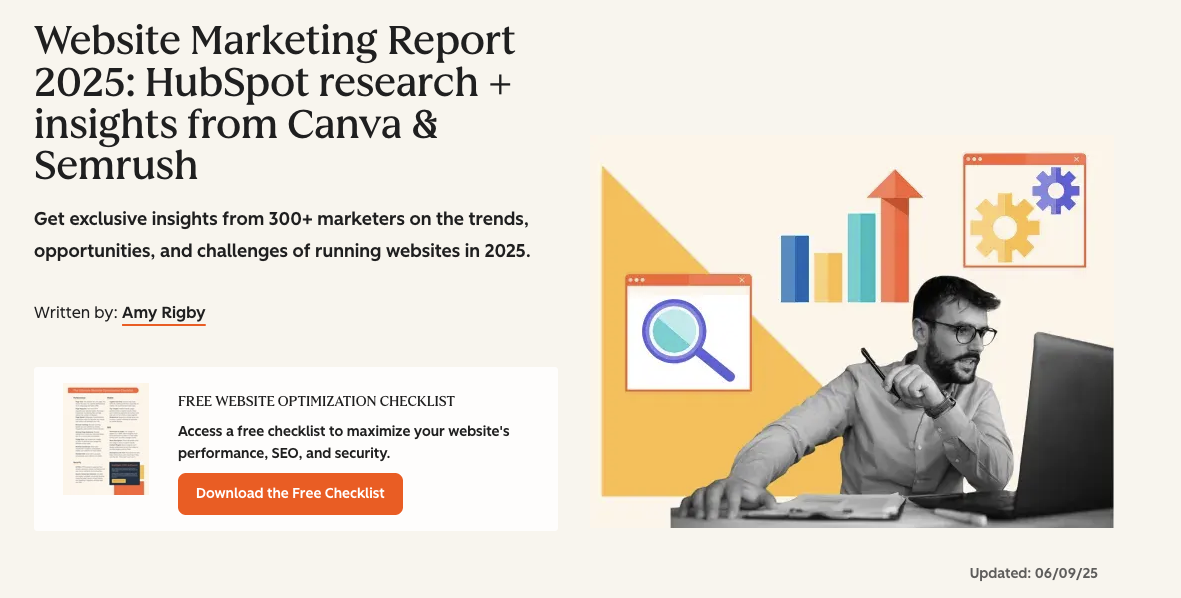
This is why brands that publish recurring research reports often “win” links for years. HubSpot is a clear example of publishing survey-driven reports and trend research that gets referenced widely across the web.
Even if your brand is smaller, the model works at any scale:
- Run a survey in your niche
- Aggregate anonymized internal data
- Build an index or quarterly benchmark report
- Turn findings into charts and a downloadable report page
3. Topical relevance over generic authority metrics
In 2026, topical alignment beats raw domain strength more often than many teams want to admit. A link from a smaller but highly relevant site can outperform a link from a big general publication in terms of:
- semantic association
- audience match
- referral quality
- co-citation patterns
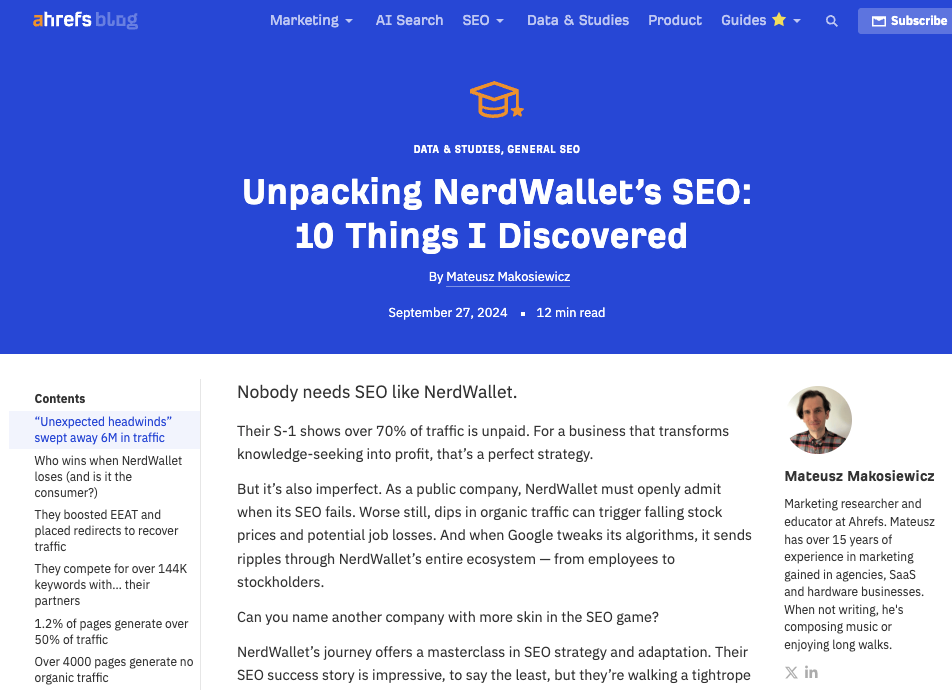
This is a key theme in modern SEO analysis of content-led brands. In Ahrefs’ analysis of NerdWallet, the emphasis is on how systematic content strategy and coverage across topics creates durable performance. Link profiles benefit when your brand becomes the obvious reference within a niche, not when you simply “collect” domains.
What to do:
- Prioritise links from sites that already rank for your target topics
- Aim for citations in relevant articles, resource pages, and expert roundups
- Build content clusters that make your site the hub for a theme
4. Relationship-based link earning
This is not “link exchange.” It is building real relationships with:
- journalists
- creators
- niche site owners
- podcast hosts
- industry associations
- communities
When your brand consistently provides useful quotes, data, or expert insight, links become a natural outcome of visibility and credibility. This also supports AI discovery, because repeated mentions in trustworthy contexts strengthen your brand footprint beyond a single hyperlink.
5. Clean technical linking and link attributes
In 2026, compliance is part of performance. Google has clear guidance on qualifying outbound links using link attributes like rel="sponsored" and rel="ugc" when appropriate.
This matters because sloppy practices can create risk. If you are paying for placements, using sponsored partnerships, or publishing user-generated links, you need to label them properly. You are not just trying to “avoid penalties.” You are signaling transparency, which is increasingly important as quality systems evolve.
What’s dead in 2026
1. Buying links that pass ranking signals
Paid links are not new, but in 2026 they are even riskier because enforcement and detection keep improving. Google’s spam policies are explicit: manipulating search systems can lead to ranking demotions or removal.
The cost is not only the link being ignored. The cost can be trust loss across a site.
If you need paid exposure, buy sponsorships for brand and referral benefits, and label them correctly. Do not disguise them as editorial.
2. Scaled guest posting and low-quality contributor networks
Guest posting is not dead. Mass guest posting is.
If the content exists only to insert a link, it is a liability. The footprint is obvious: repetitive structure, generic author bios, unnatural anchors, and sites that publish hundreds of “expert contributions” with no editorial rigor.
In 2026, the only guest content worth doing is:
- genuinely high quality
- hosted on a site with real audience and editorial review
- written to add unique insight, not to place a link
3. Parasite SEO and site reputation abuse
Publishing third-party content on “trusted” domains to piggyback authority has been heavily scrutinised, and Google’s policy focus here has been a major industry issue.
This practice is increasingly unstable because it depends on loopholes. In 2026, loopholes close faster than most teams can rebuild.
4. Link building that ignores user value
Anything that produces links but not value tends to decay:
- irrelevant directories
- templated resource page submissions
- low-effort infographics posted everywhere
- comment spam and forum signature links
- private blog networks
Even when these tactics “work” temporarily, they often fail the durability test. If the link would never exist without a ranking incentive, it is a weak long-term bet.
5. Obsessing over one metric as your strategy
Domain Rating, Domain Authority, Trust Flow, spam scores: they can be useful diagnostics, but they are not a strategy.
In 2026, a healthy link profile is a byproduct of:
- strong content coverage
- credible mentions
- brand demand
- consistent publishing quality
If your entire plan is “increase DR,” you will likely chase the wrong placements.
The 2026 link building playbook that actually holds up
.png)
What to measure in 2026
Do not measure link building by volume alone. Track:
- number of editorial placements on relevant sites
- referral traffic quality and conversion contribution
- growth in branded search demand
- topic-level ranking stability across updates
- co-citations and unlinked mentions in reputable pages
If your link work does not improve business outcomes, it is just busywork.
Closing: the real definition of a “good backlink” in 2026
A good backlink in 2026 is one that would still exist if rankings did not.
It is earned through usefulness, credibility, and relevance. It comes from pages that real people read, written by publishers that have standards, in contexts where your brand is a legitimate reference.
Everything else is a short-term tactic pretending to be a strategy.
Unlock the full strategy: Download our free E-book


Adxom is a global SEO and link-building platform
trusted by startups, agencies, and brands to grow
rankings with fast, reliable, hassle-free results.
