Schema 101: How Structured Data Powers AI Search Results
 (51).png)
The search landscape is evolving rapidly. As artificial intelligence begins to interpret, summarize, and answer user queries directly, visibility depends less on keyword density and more on clarity of data. In this new environment, structured data implemented through schema markup has become a cornerstone of discoverability. It tells machines exactly what your page contains, helping AI systems understand and trust your content.
Understanding Structured Data
Structured data refers to content that is organised in a standardised format, allowing search engines and AI models to interpret its meaning rather than just read its text. Schema.org provides the framework for this markup, offering a shared vocabulary for describing products, organisations, articles, reviews, and more.
When applied correctly, schema transforms unstructured text into machine readable statements. For instance, when a recipe page includes structured data in JSON-LD format that specifies details such as the recipe title, author, and key attributes, Google and other AI systems can interpret this information to generate a result that visually highlights the recipe in search listings.
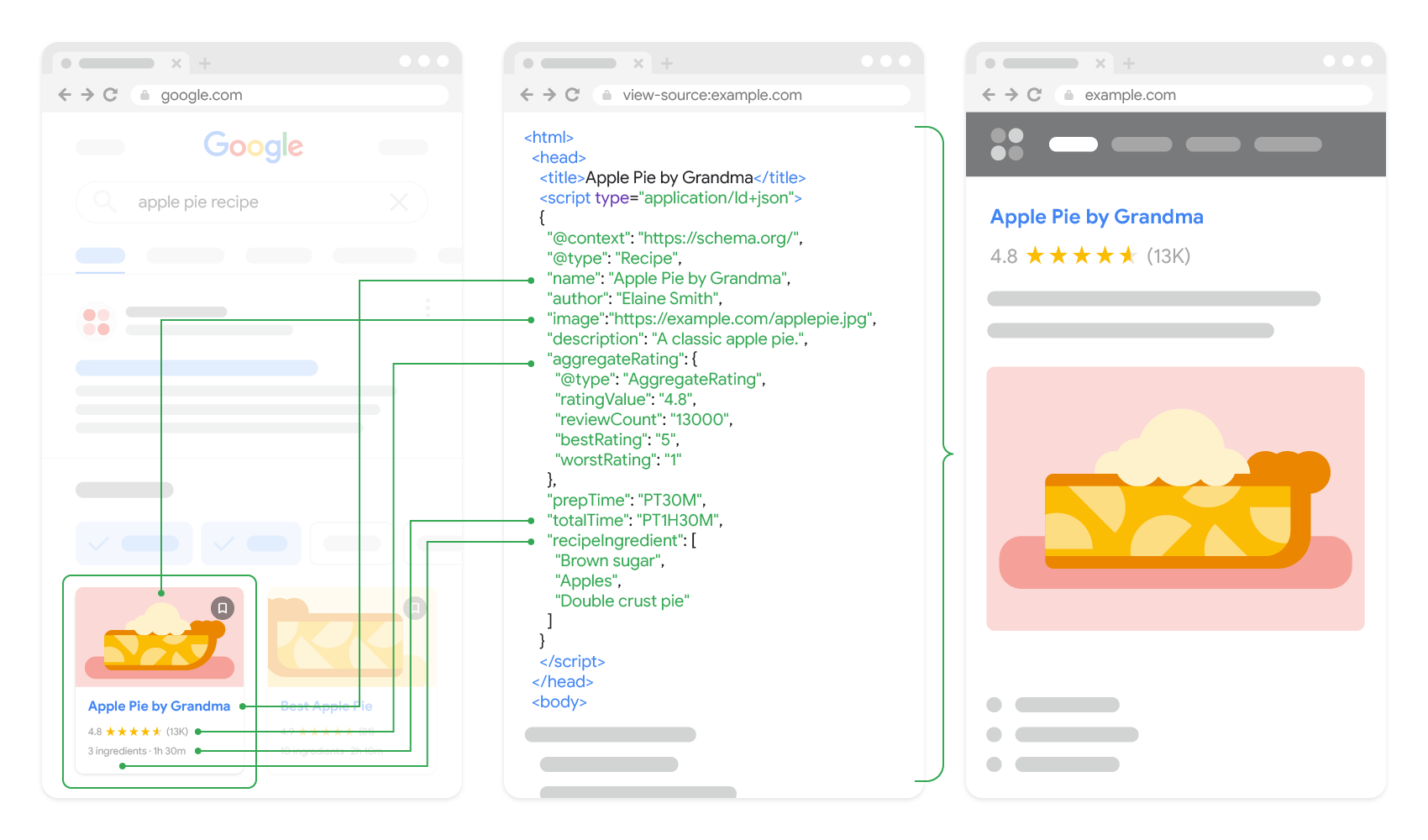
This clarity allows the model to confidently quote, recommend, or display your information in AI generated summaries, search results, and digital assistants.
Why Schema Matters in AI Search
AI powered search platforms such as Google’s AI Overviews or Perplexity rely heavily on structured data to generate accurate and factual responses. Schema helps them determine which source is the most credible and complete.
When multiple sites publish similar content, structured data acts as a signal of reliability. It reduces ambiguity and ensures that AI systems can attribute facts to the correct brand or publisher. In effect, schema increases your chances of being cited, featured, or summarised directly within AI answers which is critical exposure in a zero click world.
Real World Examples
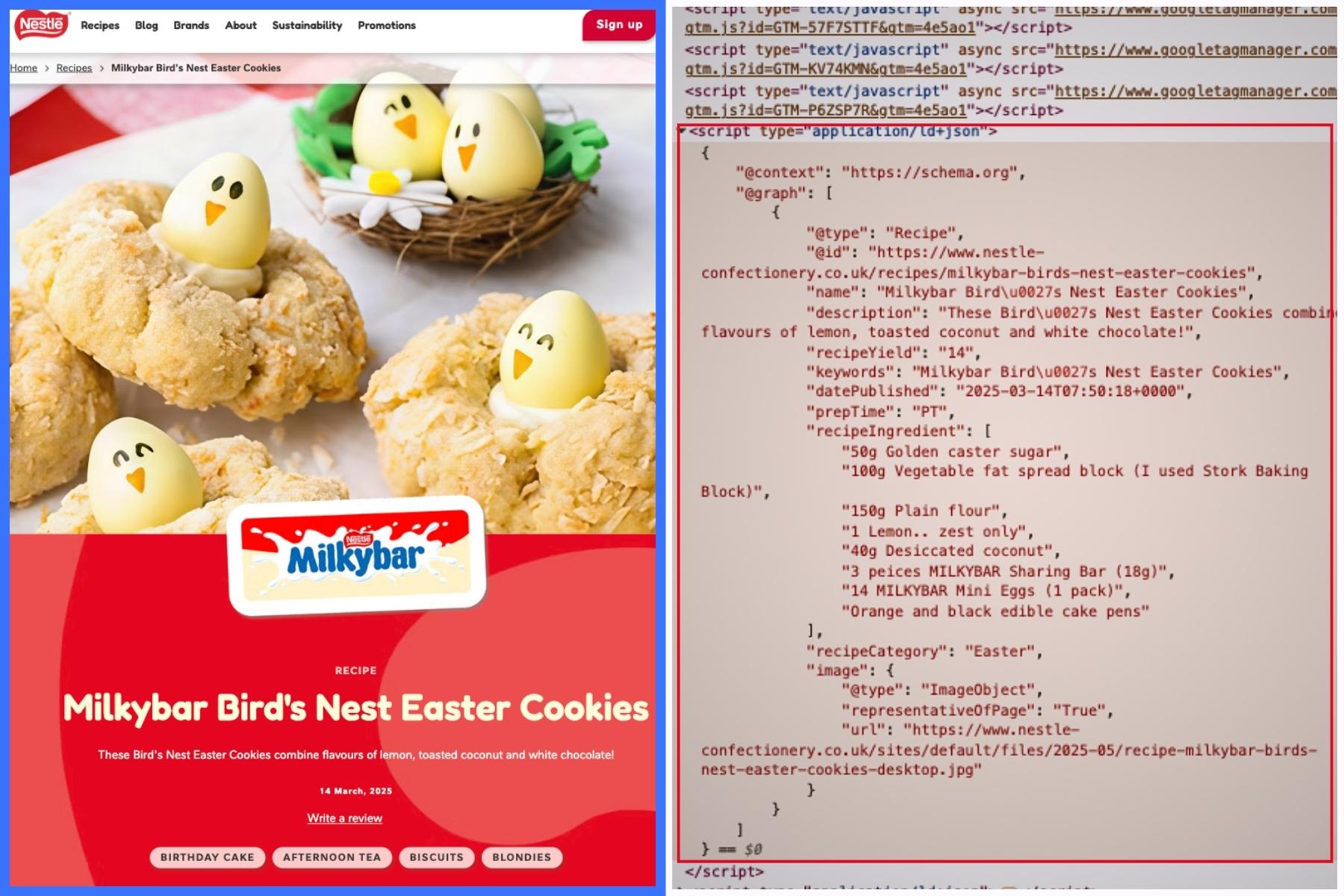
Nestlé has implemented extensive schema markup across its recipe content. Each recipe page contains structured data describing ingredients, preparation time, and nutritional information. This precision allows Google to feature Nestlé’s recipes in both rich results and AI generated summaries, extending brand reach beyond the company’s own website.
Job portals such as Totaljobs and indeed rely on structured data to classify roles, companies, and salary ranges. By marking up each listing with schema for job title, location, and qualifications, they ensure that AI systems display accurate job previews directly within search results. These structured snippets drive both visibility and trust.
.jpg)
WebMD provides another strong example. Its medical articles include schema for conditions, symptoms, and treatments. This structure allows AI systems to extract concise and verifiable facts for health related answers, often citing WebMD in generative summaries. The result is sustained visibility even as fewer users click through traditional listings.
.jpg)
These examples highlight that structured data is not confined to e-commerce. It powers discovery across industries including food, health, music, and careers.
Implementing Schema Effectively
.png)
The Strategic Advantage
Structured data serves as the connective tissue between your website and the AI driven search ecosystem. It strengthens brand credibility, increases inclusion in AI answers, and enhances visibility in knowledge panels and conversational engines.
In an age where search is less about clicks and more about context, schema helps your content remain both visible and verifiable. Brands that embrace structured data as part of their broader content strategy rather than a technical afterthought will define how AI systems perceive expertise, authority, and trust.
As AI continues to reshape search, mastering schema is not just good practice. It is the foundation for long term discoverability and competitive advantage.
Dive into our latest blog: How to Build a Topic Map That Earns Authority in AI Search


Adxom is a global SEO and link-building platform
trusted by startups, agencies, and brands to grow
rankings with fast, reliable, hassle-free results.
