How to Build a Content Graph That AI Systems Understand
 (35).jpg)
You may have already read my earlier blog, How to Build a Topic Map That Earns Authority in AI Search. If not, here it is for reference; that piece explains how a strong topic map helps your brand organise ideas, structure authority, and guide both humans and AI systems through your content ecosystem.
Now, we go one step further. Once you have designed that strategic map, the next challenge is to make it machine readable; turning your human-friendly content plan into a technical structure that AI systems can interpret, connect, and trust. This is where content graphs come in.
A content graph is a structured network of pages, entities, and relationships that allows AI models and crawlers to understand not just what your content says, but how it all fits together. When built correctly, it becomes the backbone of your topical authority, your internal linking strategy, and your visibility inside AI powered search results.
This article explains what a content graph is, why it matters in the age of AI search, and how to build one that machines can easily interpret and use.
What is a Content Graph?
A content graph represents your knowledge in a structured way. Each topic or entity, such as a product, service, or concept, becomes a node, and every connection between them forms an edge. Instead of treating every article as an isolated piece of content, the graph links related ideas together so that search engines can infer context and hierarchy.
For example, a company offering marketing automation tools might have core nodes like “Email Marketing”, “CRM Integration”, and “Customer Segmentation”. Each of these can connect to supporting nodes such as “Best Practices”, “Setup Guides”, or “Case Studies”. When a crawler or AI model scans the site, it can trace relationships, understand relevance, and determine expertise depth across the topic cluster.
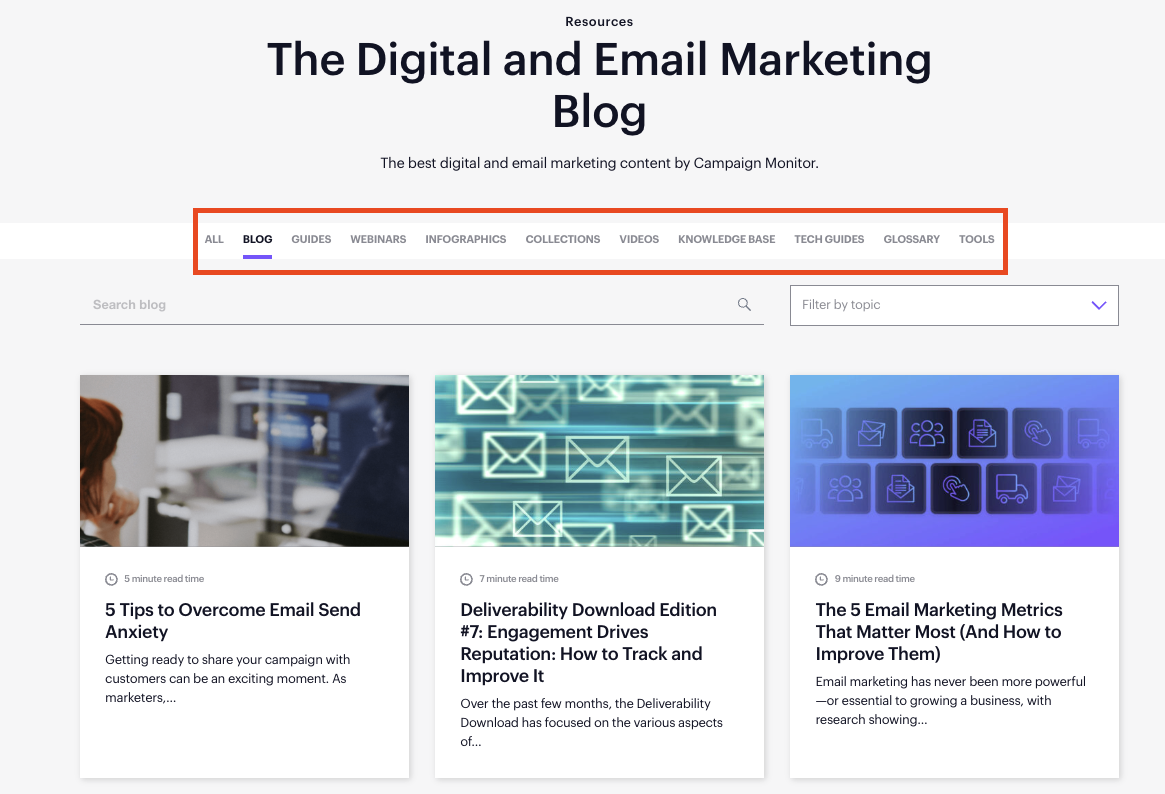
One of the best examples of this in action is Campaign Monitor, the email automation platform. Email marketing and automation serve as its central nodes, supported by an extensive network of interconnected resources. Its blogs, how-to guides, and case studies all link back to key themes such as deliverability, segmentation, and campaign optimization. This structure allows both users and AI systems to understand how each topic relates to the broader subject of email marketing, reinforcing Campaign Monitor’s authority and expertise across the entire category.
Why Content Graphs Matter for AI Search?
AI driven search systems no longer just crawl web pages. They map and model information. When your content graph is machine readable, you make it easier for these systems to recognize your site as a reliable knowledge base. This improves your likelihood of appearing as a cited source in AI Overviews, answer summaries, or voice assistant results.
.jpg)
A well structured content graph also eliminates redundancy. Instead of publishing multiple overlapping posts that compete for the same query, your graph encourages consolidation. Each node has a clear purpose, and every internal link reinforces that relationship. This clarity benefits both users navigating your site and models interpreting your authority.
Finally, a content graph aligns your website architecture with the way people actually research and make decisions. Users rarely move linearly through content anymore. They jump between related questions, comparisons, and actions. A graph mirrors this journey by connecting concepts naturally, allowing you to surface the right page at the right moment.
How to Build a Machine Readable Content Graph?
.jpg)
The Payoff of a Connected Content System
A machine readable content graph turns your website from a collection of articles into an interconnected knowledge base. It helps search engines and AI systems interpret your expertise, improves crawl efficiency, and boosts the visibility of your most valuable pages in answer driven search environments.
Brands like Adobe, Shopify, and HubSpot already use graph based structures to power internal search and AI training. Their success demonstrates that structured relationships between content pieces are now just as important as the content itself.
By building your own content graph, you prepare your digital presence for the next generation of search, one where context, relationships, and authority matter more than ever. When machines can read your content the way humans understand your ideas, you no longer chase visibility; you own it.
For a deeper look into practical strategies and future trends, explore our in-depth blog on how to dominate AI search and stay ahead in the evolving search landscape.


Adxom is a global SEO and link-building platform
trusted by startups, agencies, and brands to grow
rankings with fast, reliable, hassle-free results.
