Internal Linking for SEO: A Complete Guide
 (38).jpg)
Internal linking is one of the most underestimated levers in search engine optimization. While backlinks and content creation often dominate SEO conversations, internal links quietly influence how search engines crawl, interpret and rank your website. They shape site architecture, define topical relationships and guide users toward meaningful actions.
As search engines increasingly rely on artificial intelligence to evaluate content, internal linking has evolved from a technical task into a strategic growth system. When executed correctly it improves discoverability, strengthens authority and supports both human users and AI driven search models.
This guide explores internal linking from fundamentals to advanced strategy including real world examples from brands that use internal links as a competitive advantage.
What Is Internal Linking in SEO
Internal links are hyperlinks that connect one page of a website to another page on the same domain. These links form the connective tissue of your website enabling navigation content discovery and authority flow.
From an SEO perspective internal links help search engines understand three key things:
- Which pages exist
- How pages are related
- Which pages are most important
Every internal link provides context. When many pages link to a specific URL using relevant language search engines infer that the destination page holds authority on that topic.
Why Internal Linking Matters for SEO
Internal linking influences multiple systems within modern search engines even though it is not listed as a standalone ranking factor.
Crawlability and Indexation
Search engines discover pages by following links. Pages that are deeply buried or disconnected from the internal link structure are less likely to be crawled frequently or indexed efficiently.
A clear internal linking structure ensures that search engines can access your most valuable pages quickly and consistently.
Authority Distribution
Internal links pass ranking signals across your site. Pages that attract backlinks or organic traffic can share their authority with other pages through strategic linking.
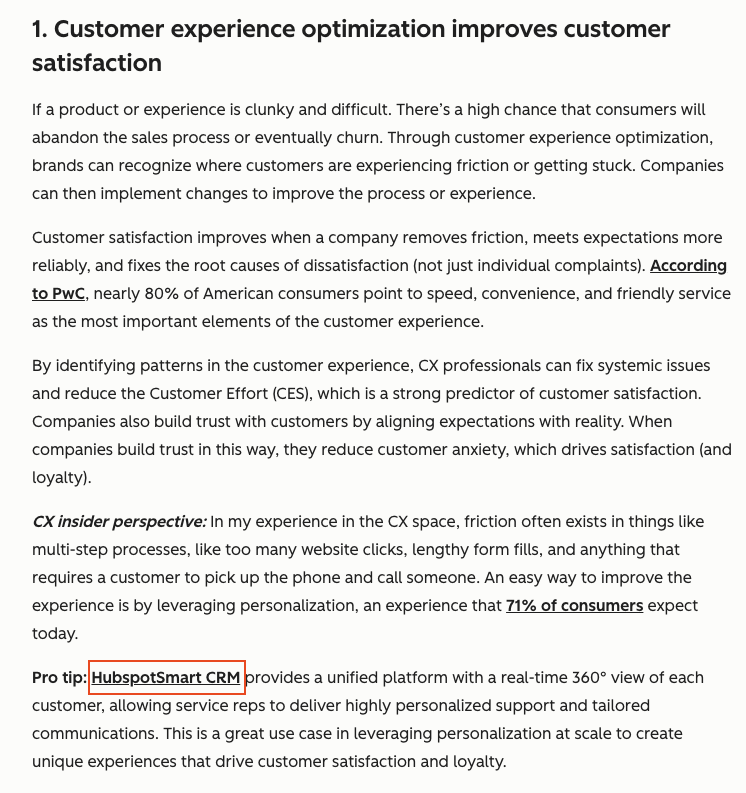
For example HubSpot uses high traffic educational blog posts to link internally to product pages tools and advanced guides. This allows informational content to support commercial visibility without relying entirely on external backlinks.
Topical Authority and Semantic Signals
Search engines assess topical authority by evaluating how comprehensively a site covers a subject. Internal linking reinforces these topical relationships.
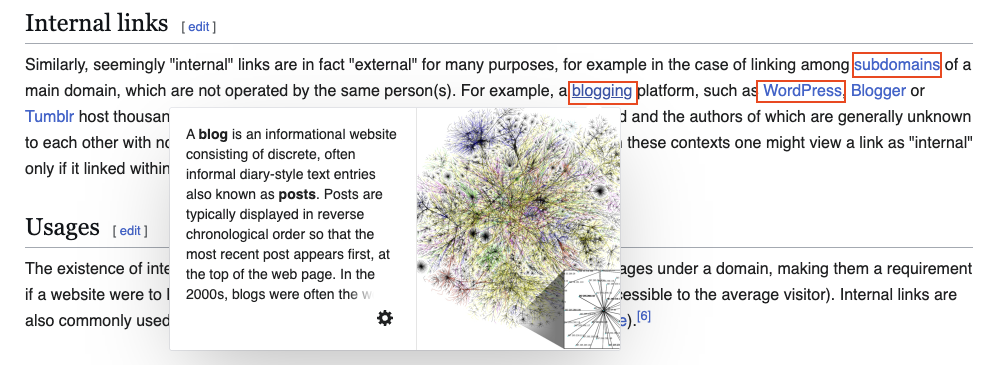
Wikipedia is a classic example. Its dense internal linking between related concepts allows search engines to understand semantic connections at scale. This structure is one of the reasons Wikipedia ranks for such a wide range of informational queries.
Improves User Engagement
Internal links guide users to relevant content reducing bounce rates, increasing time on site and supporting conversion journeys. These behavioral signals indirectly support SEO performance.
Types of Internal Links That Matter Most
Navigational Links
These include menus, breadcrumbs and footer links. They define the primary hierarchy of your site and signal which sections matter most.
Contextual Links
Contextual links appear within the main body of content and are the most valuable for SEO. They provide relevance signals and pass authority naturally.
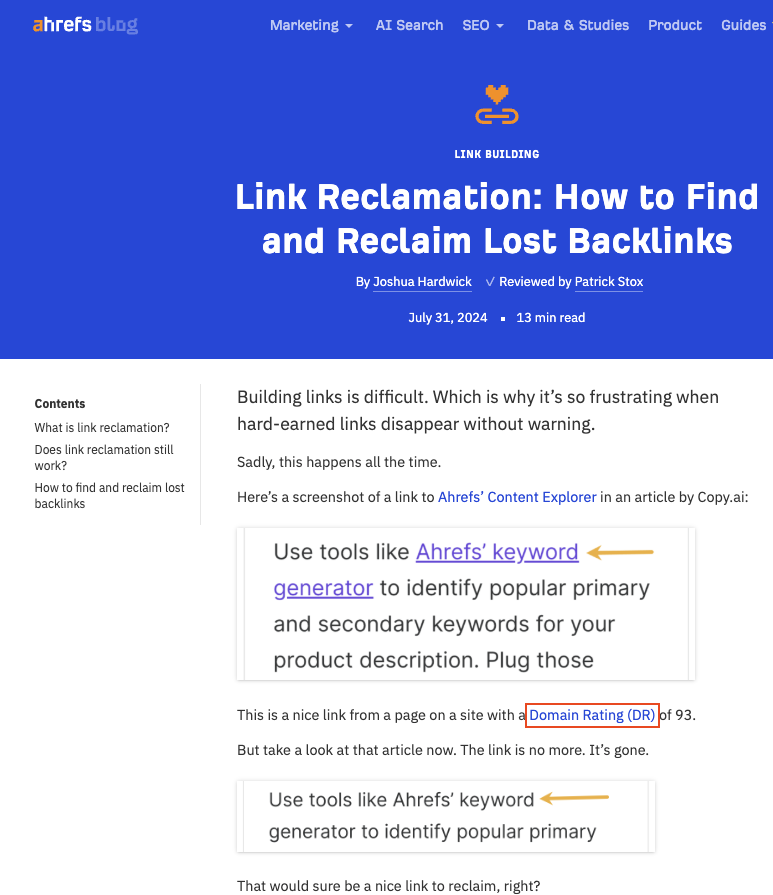
Ahrefs uses contextual internal links extensively within its blog. Articles regularly reference and link to related guides, tools and studies helping search engines understand content relationships while keeping users engaged.
Related Content Links
Often placed at the end of articles these links encourage deeper exploration and strengthen content clusters.
Image and CTA Links
Clickable images and calls to action can support conversions while still passing internal link value when implemented correctly.
Internal Linking Best Practices
Use Natural Descriptive Anchor Text
Anchor text should describe the destination page clearly and naturally. Avoid generic phrases and instead use language that reflects user intent.
Link Based on Relevance Not Convenience
Internal links should enhance understanding. If a link does not add contextual value it likely does not belong.
Prioritise High Value Pages
Commercial pages, pillar content and conversion focused pages should receive consistent internal links from relevant articles.
Maintain a Balanced Link Depth
Important pages should not be more than a few clicks from the homepage. Excessive depth reduces crawl priority and user access.
How to Build an Internal Linking Strategy
.png)
How Internal Linking Powers SEO in an AI First World
AI driven search models rely on context relationships and entity understanding rather than isolated keywords. Internal linking provides the structure that allows AI systems to interpret content accurately.
When your site consistently links related concepts together AI systems can more easily determine:
- Which pages represent core expertise
- How topics are hierarchically organised
- Which pages deserve summarisation or citation
- How users progress through intent stages
Internal links also help AI models distinguish between primary content and supporting content. Pages that receive many contextual internal links are more likely to be treated as authoritative sources.
As generative search results and conversational answers expand, internal linking becomes a way to teach AI how your site thinks.
Measuring Internal Linking Success
To evaluate performance monitor both technical and behavioral indicators.
Key metrics include:
- Index coverage and crawl stats
- Organic traffic growth to linked pages
- Ranking improvements for internally promoted URLs
- User engagement and navigation paths
- Conversion influence across sessions
Internal linking improvements often compound gradually making consistency more important than short term gains.
Common Internal Linking Mistakes to Avoid
- Using the same anchor text repeatedly for different pages
- Linking excessively from headers and footers only
- Ignoring older content that could pass authority
- Linking without relevance just to increase link count
- Forgetting to update links when URLs change
These mistakes weaken your internal link signals and reduce their impact.
Final Thoughts
Internal linking is one of the few SEO strategies that is fully within your control yet its impact spans technical SEO content strategy and user experience.
Brands that treat internal linking as a system rather than an afterthought consistently outperform competitors who rely solely on backlinks and content volume.
In an AI driven search environment internal linking is not just about rankings. It is about clarity, relevance and authority.
Build your internal links with intention and they will continue to pay dividends long after individual algorithms change.
Want to learn how backlinks impact SEO? Unlock the full strategy: Download our free E-book


Adxom is a global SEO and link-building platform
trusted by startups, agencies, and brands to grow
rankings with fast, reliable, hassle-free results.
