AI Search KPIs: How to Measure Visibility Without Clicks
 (37).jpg)
Search has evolved beyond clicks. In the age of generative AI, your content might reach millions of users through conversational interfaces and AI-powered summaries, yet never register a single click in your analytics dashboard. Traditional SEO metrics such as click-through rates, impressions, backlinks, or position tracking, no longer capture the full picture of visibility.
So, how do you measure success when searchers don’t need to click? How do you prove that your content still influences awareness, trust, and conversions?
The key lies in understanding AI search KPIs, the new generation of metrics that measure presence and authority inside AI-driven environments. These KPIs help you evaluate how effectively your content feeds the machine learning systems that now act as gatekeepers between your brand and the audience.
Understanding the Shift to AI Visibility
AI search engines such as Google’s Search Generative Experience, ChatGPT, and Perplexity AI are transforming how users find and consume information. Instead of a list of links, they generate direct, conversational answers. This means your content might be used as training data, retrieval material, or context, but not as a clickable result.
Visibility is now about being cited, referenced, and surfaced in AI-generated answers, not just appearing on page one. In this new reality, your content must be machine-readable, semantically rich, and connected across topics through an internal content graph. Once your structure is understood by AI, you can start measuring how often and how meaningfully your content is being retrieved.
The Three Core Dimensions of AI Search KPIs
1. Retrieval and Reference Metrics
Instead of tracking who clicks, you now track whether your content is being used. AI systems pull information from multiple sources, summarising and synthesising. Retrieval-based KPIs reveal how often your content or brand is surfaced during this process.
Citation Frequency: How often your brand is referenced within AI-generated responses. For example, Maya Clinic’s guides on Cosmetic Treatments often appear in AI summaries for related searches. Even if users do not click, they gain exposure as an authority.

Content Chunk Retrieval Rate: AI models often extract small, meaningful sections rather than whole pages. Tracking which paragraphs or concepts are consistently retrieved can reveal your strongest semantic clusters.
Semantic Match Rate: Measures how frequently your content’s embeddings align with AI query intent. Brands that optimise their content graphs for contextual relationships, such as Adobe’s structured documentation for creative tools, increase their chances of retrieval.



These metrics help teams understand where and how AI models are using their content, even when traditional traffic metrics show no direct referral.
2. Authority and Narrative Inclusion
Being mentioned by an AI system is good, but being referenced as a credible voice is even better. This dimension tracks how AI-generated outputs treat your brand’s role in the conversation.
Brand Share of Voice in AI Outputs: The proportion of AI answers that include your brand compared to competitors. If Shopify appears to dominate searches about e-commerce scalability than BigCommerce, that signals higher topical authority.


Narrative Inclusion: The depth and quality of the mention. Are you part of the story or just a side note?IBM’s content on AI, for instance, is often cited as a methodology source, not just as a product link.
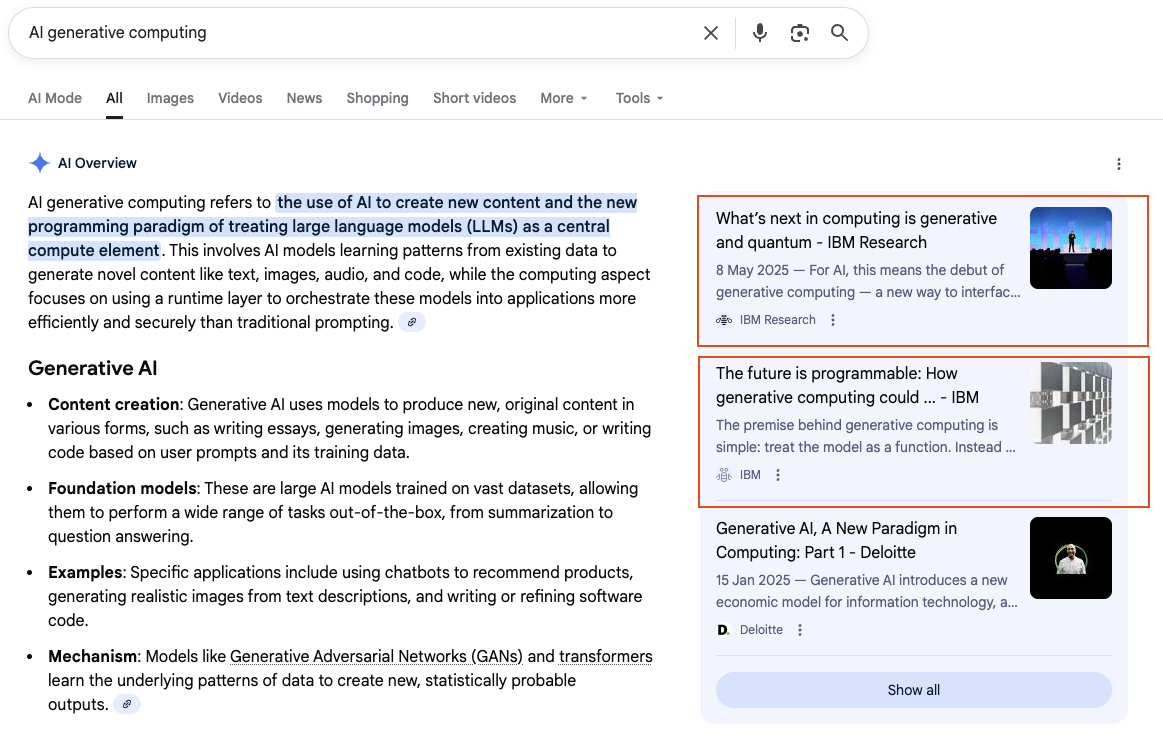
Sentiment of Reference: The tone in which your brand is mentioned. AI systems may reinforce or distort perception based on the sentiment of their training data. Tracking positive versus neutral references helps protect brand equity.
The goal here is to dominate narrative real estate. When AI explains your industry, your voice should be embedded in its reasoning, not left at the margins.
3. Influence and Behavioural Metrics
Even without clicks, AI-driven visibility can shape user behaviour across the funnel. This dimension focuses on the impact of AI exposure on awareness, interest, and conversions.
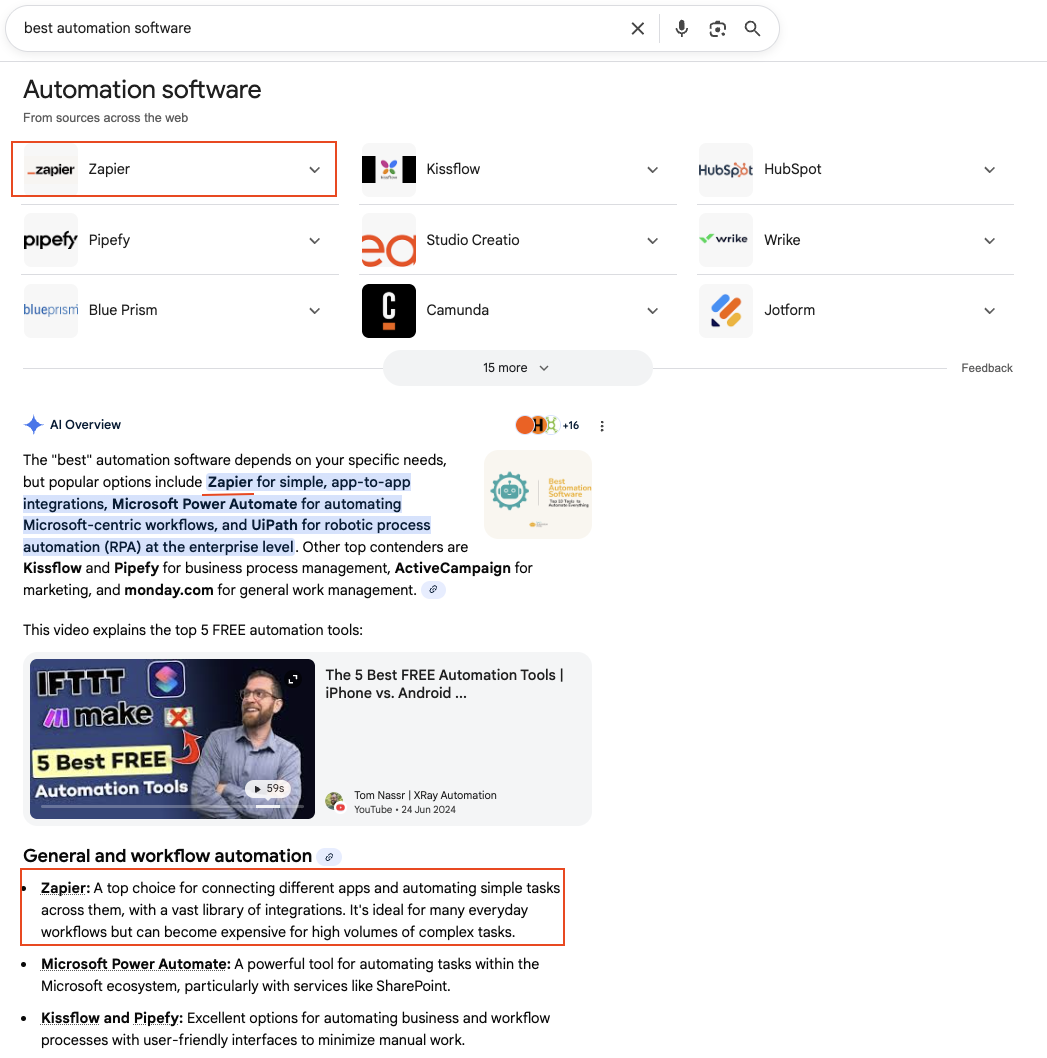
Branded Query Growth: A spike in searches for your brand after users encounter it in AI answers indicates successful awareness lift. For example, when users ask AI tools about “best automation software,” frequent mentions of Zapier lead to more branded searches later.
Assisted Conversions: Attribution models should now consider AI interactions as top-of-funnel touch points. If exposure in an AI chat leads to a later site visit or purchase, that’s measurable influence.
AI Referral Traffic: Some emerging analytics platforms track indirect referrals from AI-enabled browsers or extensions. Monitoring this helps identify hidden demand generated through generative exposure.
Engagement Lag Time: Measuring the time between AI-based visibility and downstream actions, such as newsletter sign-ups or demo requests, helps reveal delayed influence.
Marketers who embrace these influence metrics can connect the dots between unseen exposure and measurable growth.
Building an AI-Ready Measurement Framework
To operationalise these KPIs, your content infrastructure must evolve. Think of your content as data—structured, labeled, and interlinked for machine comprehension. Here is how to make that shift actionable:
- Audit your content for machine readability. Use schema markup, consistent entity naming, and clear internal linking so AI crawlers can interpret meaning rather than just keywords.
- Tag content by topic nodes. Group pages and assets by conceptual relationships to build a living content graph that mirrors how AI organises knowledge.
- Monitor generative search platforms. Regularly test how AI tools answer key queries in your domain. Record where your brand appears and the quality of those mentions.
- Correlate AI visibility with traditional metrics. Compare shifts in branded search, direct traffic, or conversions following increased AI citations.
- Report new KPIs alongside legacy ones. Continue tracking CTR and traffic but pair them with retrieval and influence data to tell the full visibility story.
This approach allows SEO teams to demonstrate value beyond clicks, proving that visibility in generative ecosystems drives tangible business outcomes.
The Future of Measuring Search
As search continues to evolve into an AI-first environment, the most successful brands will measure influence, not just interaction. They will understand that visibility in AI search is about shaping the model’s understanding of the world—being the trusted source that machines choose when constructing answers.
Brands like Adobe, HubSpot, and Shopify already exemplify this by creating semantically connected, context-rich content ecosystems. They’re not optimising for blue links but for presence in the reasoning layer of AI.
In 2026 and beyond, search visibility will belong to those who adapt their KPIs to reflect this new reality. It’s no longer about who gets the click. It’s about who owns the conversation before the click ever happens.
For a deeper look into practical strategies and future trends, explore our in-depth blog on how to dominate AI search and stay ahead in the evolving search landscape.


Adxom is a global SEO and link-building platform
trusted by startups, agencies, and brands to grow
rankings with fast, reliable, hassle-free results.
